Decorating a small or awkward wall can feel like a puzzle—especially when you want to incorporate leaf, star, or flower motifs without creating visual clutter. The challenge isn’t just picking individual pieces; it’s choosing a layout that makes the space feel intentional. That’s why wall decor layout ideas for small awkward walls should start with a clear arrangement strategy. Before you worry about specific frames or colors, decide on a visual direction: vertical, centered, asymmetrical, layered, or a restrained gallery grouping. This approach helps you avoid a crowded or disconnected look, even when multiple motifs compete for attention. The concepts below offer distinct starting points, each using organic shapes to guide the eye and balance the wall. As you read, keep in mind that these are editorial concept illustrations, not photographs of finished projects, and no physical instructions or materials are provided. Use them as inspiration to find the layout that suits your wall’s shape and your preferred atmosphere.
Wall Decor Layout Ideas: The Vertical Leaf Trail
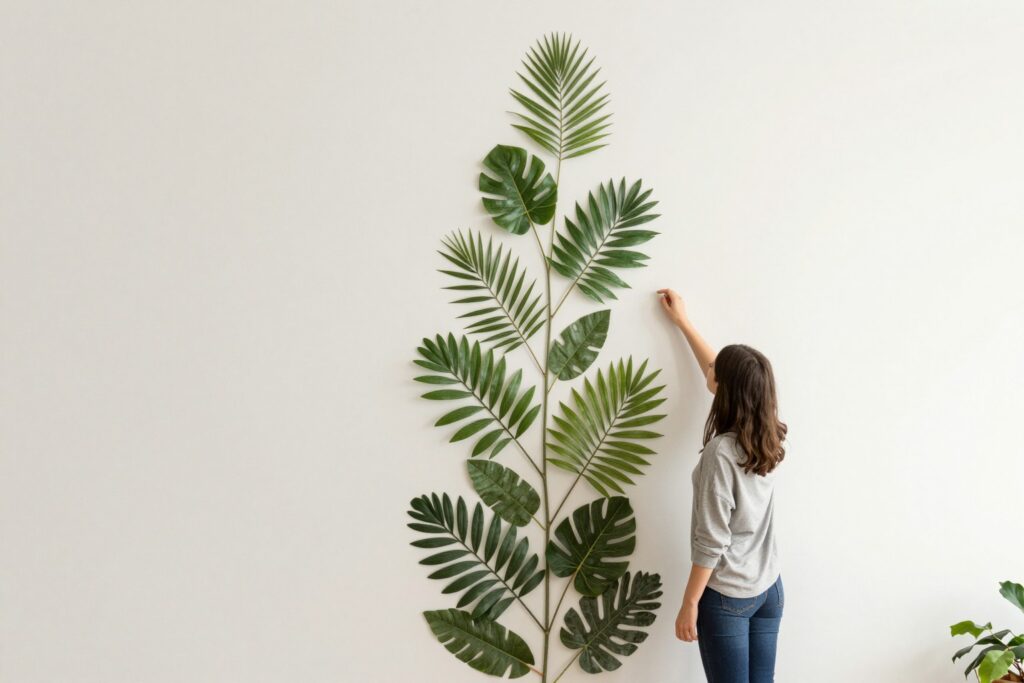
When horizontal space is tight, a vertical arrangement can make a narrow wall feel purposeful. This concept guides the eye upward with a trail of leaf motifs, gradually drawing attention from a lower starting point toward the ceiling. The visual choice emphasizes height and movement, turning a limitation into a feature. It works well for slim alcoves, between windows, or beside a door where a horizontal gallery would feel cramped.
In terms of where it might fit, consider a hallway, a bathroom corner, or any tall, slender wall that currently feels empty. The leaf trail can be composed of individual pieces at varying heights, or a single elongated artwork, but the key is the upward flow. This layout suits a calm, organic atmosphere and pairs well with natural textures or earthy tones. It’s a way to add interest without overwhelming the space.
The Centered Flower Medallion
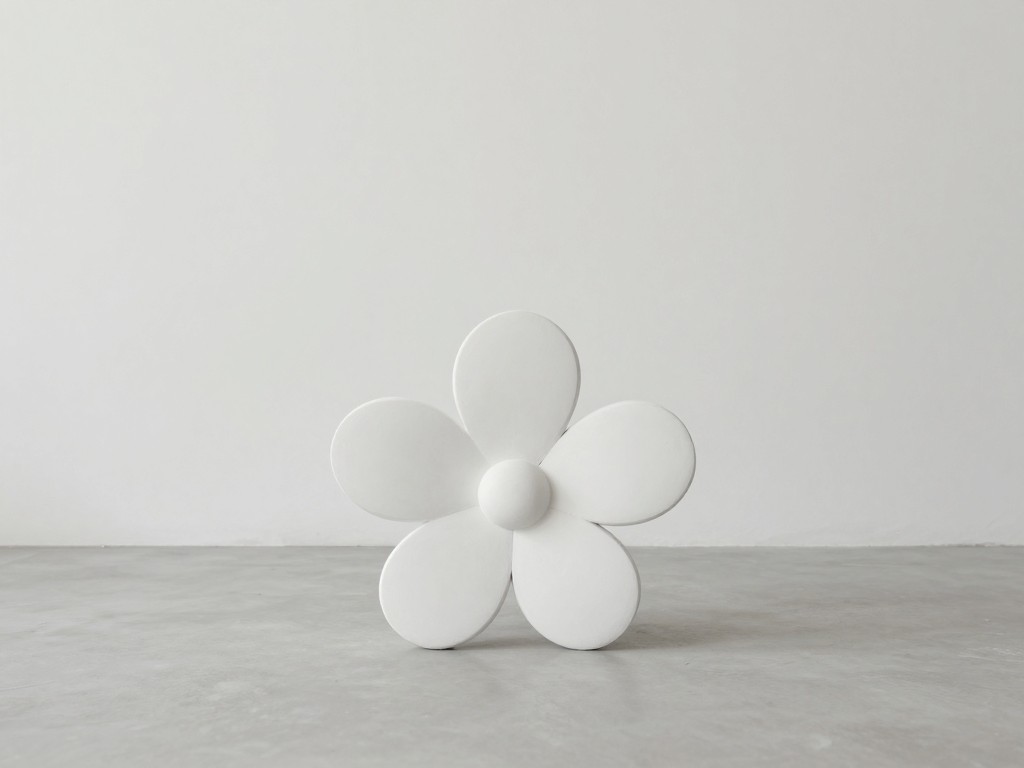
For a small wall that needs a focal point, a centered grouping around a single flower motif can feel deliberate and balanced. Symmetry provides instant order, making the arrangement look composed even in a tight area. The flower acts as the anchor, with smaller elements or subtle variations in frame size radiating outward. This choice is ideal when you want a quiet, formal, or romantic touch.
This concept fits well above a small console table, in a powder room, or on a wall segment that’s isolated by doors or windows. It doesn’t require a large gallery wall; a compact cluster can be enough. The centered medallion approach works best when you keep the surrounding palette restrained, letting the flower motif stand out. It’s a way to make a small wall feel intentional without filling every inch.
The Star-and-Leaf Offset
An asymmetrical composition can feel relaxed and modern, especially when a star serves as the visual anchor and smaller leaf forms orbit around it. This offset arrangement avoids the rigidity of perfect symmetry, adding a sense of movement and informality. The star provides a clear focal point, while the leaves soften the overall look and connect it to nature. It’s a good choice for a wall that doesn’t have a natural center.
This layout might suit a home office, a child’s room, or a casual living space where you want a touch of whimsy without being too theme-heavy. The offset can be subtle—just enough to break the grid—or more pronounced, depending on your comfort level. Because the composition is less structured, it can adapt to walls with irregular corners or furniture placement. It’s a way to introduce organic motifs with a bit of playful energy.
The Layered Motif Shelf
Layering framed or dimensional-looking leaf, star, and flower concepts in overlapping visual planes adds depth to a limited wall area. Instead of hanging everything flat against the wall, this approach suggests placing some pieces slightly forward or grouping them so they partially overlap. The result is a display that feels richer and more dynamic, even in a small footprint. It’s a technique that draws the eye in and invites closer looking.
This concept works well on a shelf, a mantel, or a narrow ledge where you can lean items rather than hang them. It also suits a wall that receives side lighting, as the shadows created by layering can enhance the texture. The layered motif shelf is ideal for someone who wants to mix motifs without a traditional gallery wall. Keep the color palette cohesive to prevent visual chaos, and let the depth do the work.
The Three-Frame Nature Rhythm
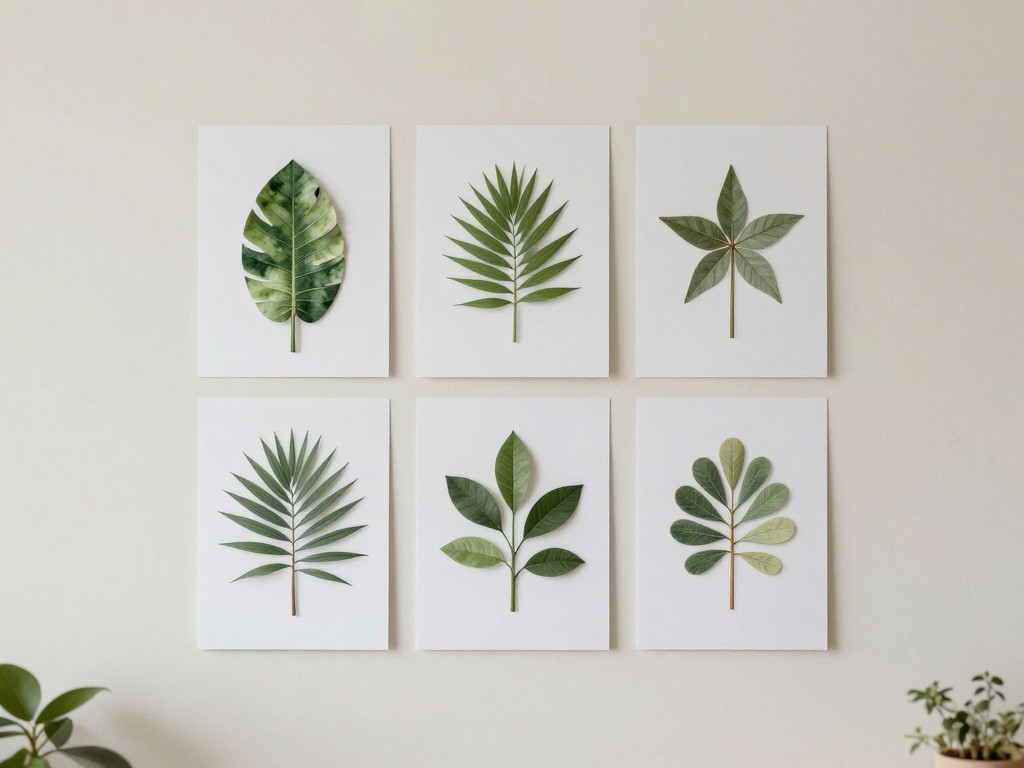
A restrained trio of coordinated frames can create gallery-wall cohesion without filling every available spot. Alternating leaf, flower, and star motifs in three frames establishes a rhythm that feels collected yet intentional. The repetition of frame style or color ties the group together, while the varying motifs keep it interesting. This approach is especially useful when you want a finished look but have limited wall space.
Consider this layout for a small dining nook, a bedroom wall, or an entryway where you want a simple statement. Three frames in a row or a loose triangle can fit above a small piece of furniture. The key is to let the motifs alternate in a way that feels balanced—perhaps leaf, star, flower—so the eye travels across the group. It’s a manageable way to introduce nature-inspired decor without committing to a large arrangement.
The Corner-Bloom Composition
Corners are often overlooked, but they can become the starting point for an organic arrangement. This concept begins near a wall corner and opens outward with flower and leaf forms, using the corner as an anchor rather than an obstacle. The composition can wrap slightly around the corner or fan out along one wall, creating a sense of discovery. It turns a dead zone into a feature.
This layout fits well in a reading nook, a stair landing, or any room where a corner feels bare. The organic shapes soften the hard angle of the walls, making the space feel more cohesive. Because the arrangement starts at the corner, it can be as small or as expansive as the wall allows. It’s a way to bring a touch of nature to an unexpected spot and make the most of an awkward edge.